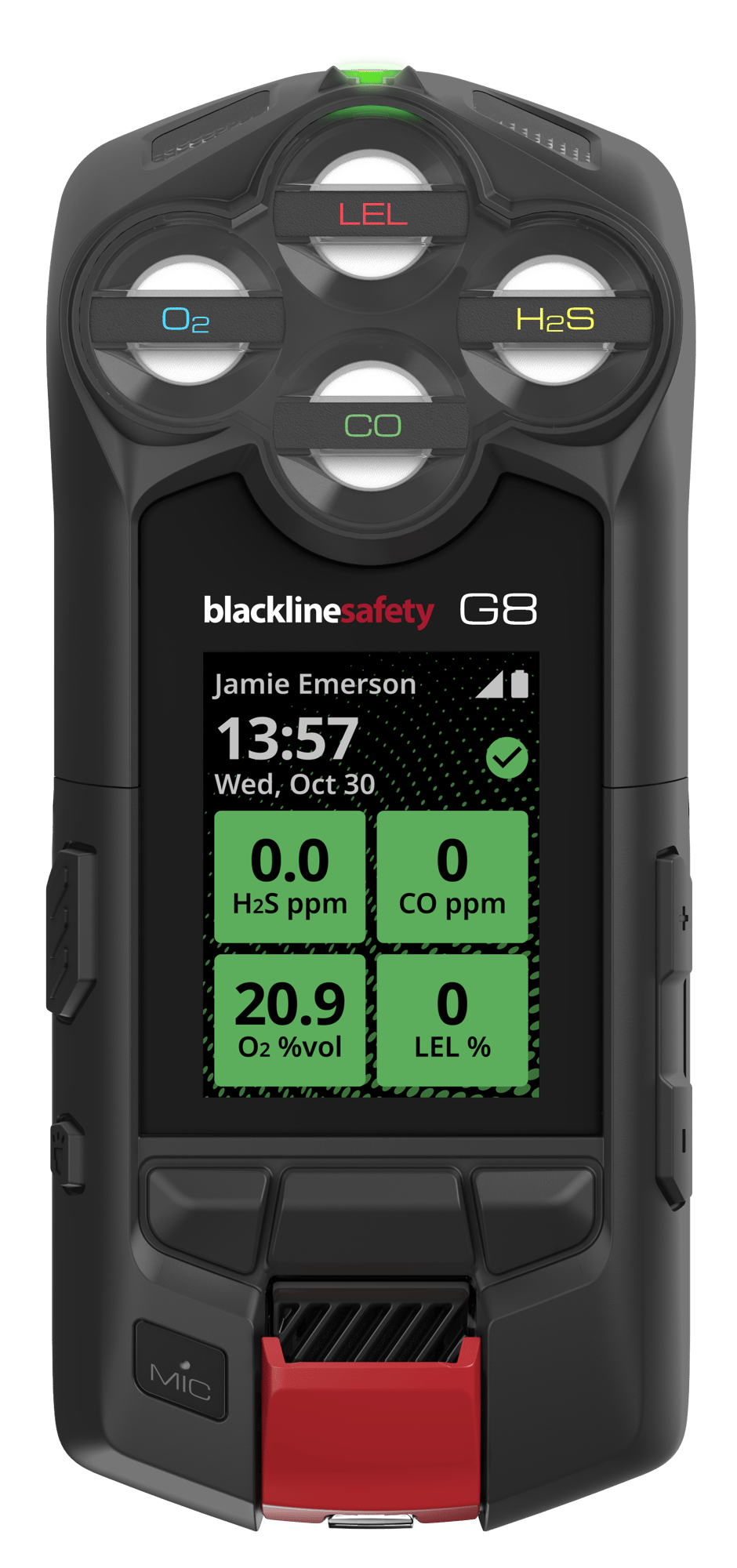
Blackline Personal Gas Detectors and EXO area monitors constantly detect both VOC ambient gas levels and the employee's location, reporting this data back to the cloud wirelessly via cellular or satellite connectivity. These devices utilize advanced PID sensors for VOC detection, capable of measuring very low concentrations of organic chemicals and other air pollutants that can affect indoor air quality.
Every reading streamed to the cloud ensures that all data is immediately available for visualization of PID readings on a map overlay, giving Industrial Hygienists and HSE Managers the ability to identify hotspots and problem areas and take proactive action to address an issue before it becomes an incident. This real-time monitoring is crucial for detecting VOC emissions from various sources such as hazmat, building materials, cleaning supplies, and industrial emissions.
PID pour les COV
The devices utilize photoionization detection (PID) technology, commonly referred to as a PID detector or photoionization detector, which harnesses UV light to ionize VOC gases—volatile organic compounds—with ionization thresholds below the photon energies emitted by the lamp. This advanced method, often integrated into PID multi-gas monitors, enables the detection of a wide range of organic solvents, including benzene, and other gases at remarkably low concentrations, down to the ppb range (parts per billion), far beyond what’s perceptible to human senses.
With high sensitivity, these calibrated tools measure VOC monitoring needs effectively, identifying compounds with high vapor pressure at room temperature. Many VOCs are notorious for their adverse health effects, potentially affecting the central nervous system, causing throat irritation, and necessitating robust personal protection strategies.
Though many VOC gases remain invisible, their emissions significantly degrade both indoor and outdoor air quality, posing environmental challenges. Characterized by their high vapor pressure, these compounds evaporate readily, mingling with other air pollutants—like oxygen-depleting substances—to form complex mixtures. VOC emissions often go undetected until they reach hazardous levels, making multi-gas monitors essential for detecting leaks and ensuring safety during confined space entry. Alongside other pollutants, VOCs can have serious health implications, emphasizing the need for precise measurement in ppm (parts per million) and comprehensive air quality management. From industrial processes to everyday household products, the diverse sources of volatile organic compounds highlight the critical role of advanced monitoring and control measures.
The G8 gas detection device ecosystem, featuring PID equipped multi-gas monitors, excels at detecting and monitoring VOCs, offering invaluable support in preventing and responding to chemical spills, detecting leaks, and maintaining air quality across various settings. By delivering real-time data on VOC levels with pinpoint accuracy, these devices empower proactive steps to safeguard human health, enhance personal protection, and ensure safer working environments—whether in industrial facilities or confined spaces requiring meticulous environmental oversight.
Applications typiques
- Sécurité du personnel
- Hygiène industrielle
- Contamination des sols et assainissement
- Émissions involontaires
- Application de la loi
- Intervention d'urgence
- Détection des fuites
- Surveillance périmétrique
- Raffineries et pétrochimie
- Surveillance de la qualité de l'air
Rapports d'alerte historiques
Les flux de données provenant de chaque appareil G8 génèrent un volume important de données qui sont traitées par le tableau de bord Blackline Live . Blackline Analytics aux utilisateurs de mieux comprendre comment et où les équipements sont utilisés, où des risques sont identifiés, et chaque test de fonctionnement, étalonnage et exposition au gaz est automatiquement enregistré.
Technologie innovante de capteurs de gaz
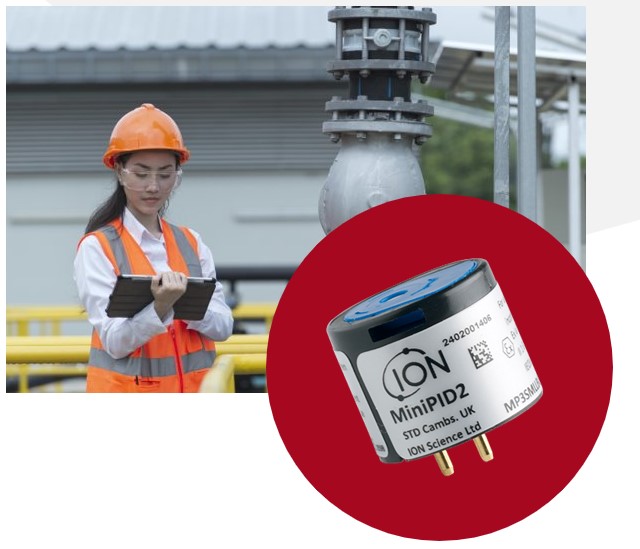
Le MiniPID 2 d'ION Science offre une réponse dynamique et fiable à un large éventail de composés organiques volatils (COV) dans une vaste gamme d'applications.
- • Résistant à l'humidité
- • Conception anti-contamination
- • Durée de vie de la lampe : 10 000 heures
- • Stabilité thermique de pointe au niveau mondial
- • Lampe de 10,6 eV
- • Tableau interne des gaz contenant plus de 700 COV et composés toxiques
- • Durée de vie prévue > 5 ans
Le capteur MiniPID 2 intègre la technologie brevetée Fence Electrode Technology qui garantit des résultats fiables dans les environnements les plus difficiles grâce à ses performances de pointe en matière de résistance à l'humidité et à sa conception anti-contamination qui protège le capteur de l'humidité, de la poussière et des aérosols. Conçu pour l'échantillonnage par diffusion et par pompage, le MiniPID 2 offre un temps de réponse exceptionnel.
Doté d'une lampe longue durée de nouvelle génération, le MiniPID 2 offre une stabilité exceptionnelle et des performances durables, permettant une détection fiable pendant 10 000 heures d'utilisation. Le MiniPID 2 nécessite donc beaucoup moins d'entretien que les capteurs PID de la génération précédente.